
Deed Types in Racine County Records
Not every instrument recorded by the Register of Deeds is a deed. Not every deed makes the same promises, either. Each type names parties and describes a transfer differently. The Racine County online index also reaches mortgages, satisfactions, and assignments. It covers liens, easements, restrictive covenants, and survey or plat-related instruments too. Treat the deed type as a clue to the transaction. Reading the filed text is the only way to know what was actually promised.
| Deed Type | What It Does | Common Use |
|---|---|---|
| Warranty deed | Conveys property with stated title warranties. | Common in a sale; read the covenants. |
| Quitclaim deed | Transfers the grantor's interest, if any, without broad title promises. | Family transfers or title cleanup. |
| Trustee or executor deed | Shows a fiduciary conveying an estate or trust interest. | Estate administration or trust conveyance. |
| Mortgage and release | Records a security interest and a later satisfaction or release. | Loan and discharge history. |
| Easement or covenant | Records a use right or a land restriction. | Access, utilities, and property obligations. |
A mortgage or lien is an encumbrance, not a transfer of title. A satisfaction or release can clear a recorded mortgage years later, and a court judgment may live in a separate case record entirely. Check each later instrument yourself. Never assume a debt vanished just because the property changed hands.
Racine County LandShark Coverage and Cost
LandShark's computer tract indexing and real-estate document images cover 1989 to the present, per the Occasional User instructions. Tract and document-index searches are free. A grantor or grantee search costs $5. Images run $2 for the first page and $1 for each additional page. Buying with a card requires a new user account and adds a $3 convenience fee. The $50 shown at purchase is only a preauthorization, charged as images are actually accessed.
| Action | Cost described by the office | Practical note |
|---|---|---|
| Tract or document index search | No charge | Use the legal description and parties as separate search paths. |
| Grantor or grantee search | $5 | Check spelling and party role before purchase. |
| Document image | $2 first page; $1 each added page | Account and card are needed for online purchase. |
| Card convenience charge | $3 | The $50 display is preauthorization, not a flat image fee. |
Occasional users skip the daily-access agreement entirely; daily use requires one. The Register of Deeds counter also offers public computer search access during posted hours, first-come, first-served. Before budgeting for a large image set, confirm current purchase terms in the live user instructions, since fees and rules can shift.
Racine County Deed Index Search Limits
LandShark's own disclaimer calls the index a working index. It warns of possible errors or omissions. Entries are double-entry checked after recording. Even so, the office recommends searching several ways. A missing match can reflect a misspelling, a tract description, or a party role. It could also be a delayed index entry or a document outside the online coverage window. The live document-type dropdown also changes over time. Treat any named examples as illustrative rather than exhaustive. Try alternate spellings and multiple search angles before concluding anything.
The disclaimer offers one more caution. Blue or light ink can reproduce poorly. Instruments recorded before a 1997 legibility rule may be genuinely hard to read. When an image is faint, save the document number. Ask the office whether a better reproduction exists. An unreadable image is not proof that no record exists.
Older Racine County Deeds Need a Different Route
LandShark's stated online range begins in 1989. The county publishes no complete older deed-book catalog with an exact earliest deed year, so no precise pre-1989 cutoff by book can be promised. When your chain reaches past the web index, contact the Register of Deeds about counter terminals, office books, microfilm, or an archival finding aid. State and historical collections add map and context clues. They do not replace the county's operative land-title records.
The 1908 Racine and Kenosha plat book and the 1900 Town of Racine map can identify a subdivision, a road, or a past landowner label. Use those labels to sharpen an old deed search. The Racine County former-owner trail explains how the chain moves backward and how to handle gaps along the way.
Racine County Transfer Fee as a Price Clue
The Register of Deeds FAQ states that a real-estate transfer fee applies to most conveyances. But not all conveyances are covered. When it applies, dividing the fee by .003 estimates a sale value. Treat that result as a clue only. An exemption can change what the number means. A non-market transfer or one transaction spanning several parcels can change it too. Read the deed and its related transfer return. Compare the result with Ascent Sales History. Do not trust the formula as a verified sale price.
A recorded consideration amount is not an assessed value and not a current market appraisal. The deed records the transaction and its parties. The assessor's values serve the tax record. Even on the same parcel, those fields answer different questions.
Racine County Court Records and Land Claims
Court files live apart from deed records in LandShark. A foreclosure, probate transfer, or court judgment can still shape the history around a deed. Wisconsin Circuit Court Access offers public case information across the state's circuit courts. It lists docket entries, parties, and status. It is an index, not the full file. The Racine County Clerk of Circuit Court keeps civil, criminal, probate, juvenile, and traffic records. That office handles requests for complete copies. A docket entry alone proves little. It will not show whether a property lien is still active or was properly released. When a case document controls a transfer or lien, ask the clerk for the file itself. Then confirm the transfer in the recorded instrument. The Wisconsin Circuit Court Access search is the public starting point for case summaries tied to Racine County.
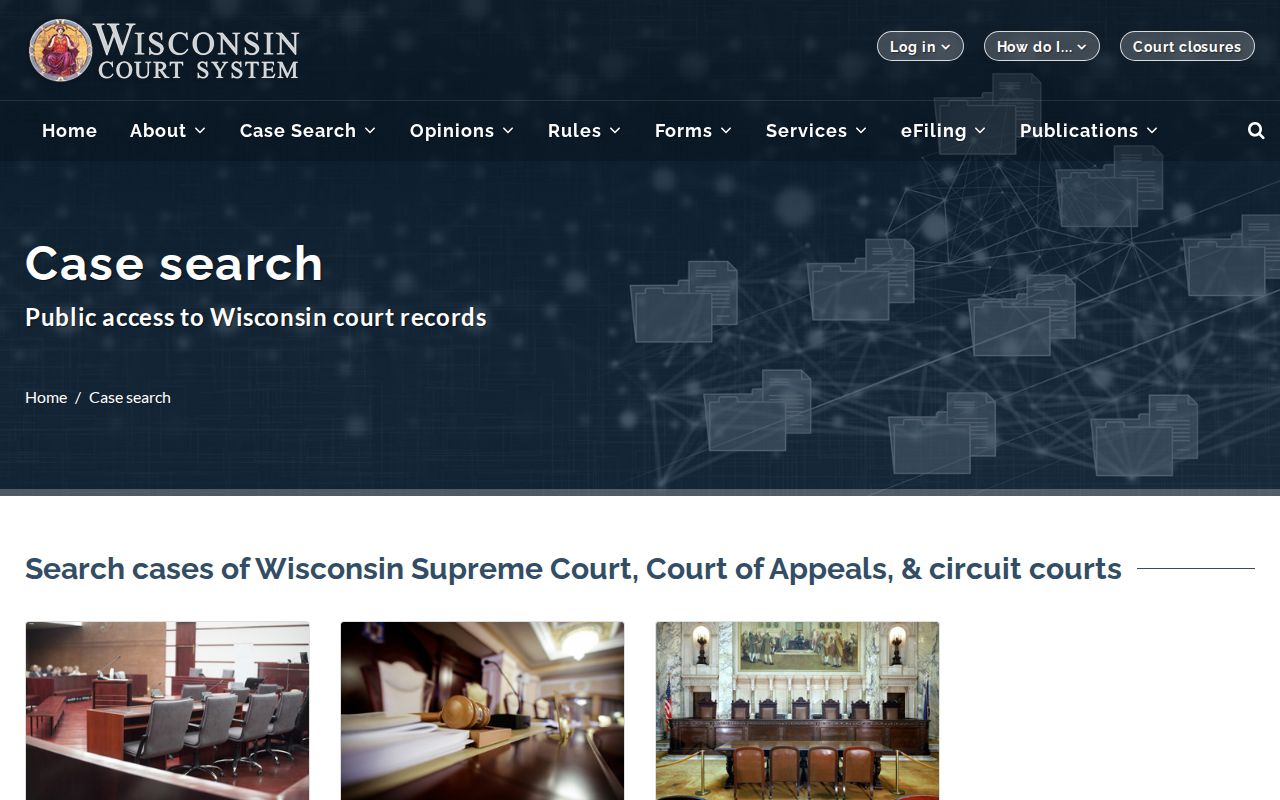
Use court material to spot a related file, then confirm any land transfer in the recorded deed itself.
Follow Racine County Grantors and Grantees
A grantor conveys an interest in the land. The grantee receives it. To trace a chain, begin with the latest deed into the current owner, then search that grantee as the next grantor and keep moving backward. LandShark offers two paths. Its computer tract index works from legal descriptions, while its document index supports searches by instrument, so try both party names and tract details when one route stalls. The online real-estate index and images begin in 1989, so older links call for a counter visit or a historical search.
- Find the latest deed that names the current owner as grantee and record its legal description.
- Read the grantor, recording date, instrument reference, and any stated consideration.
- Search the grantor's earlier acquisition as a grantee, using the tract description as a cross-check.
- Repeat until the index reaches its online period, then ask the office about older books or microfilm.
- Grantor
- The person or entity conveying an interest in the document.
- Grantee
- The person or entity receiving that interest.
- Chain of title
- The ordered set of recorded transfers linked to a parcel.
- Tract index
- An index organized around the land description rather than only a party name.
Getting a Racine County Recorded Deed
Online images are one way in. The counter is another. The Register of Deeds sits at 730 Wisconsin Avenue in Racine, with public computer document-search access from 8:30 a.m. to 4:00 p.m. on a first-come basis. Office hours run Monday through Friday, 8:00 a.m. to 4:30 p.m. Documents may be dropped off, mailed, or electronically recorded. Non-e-filers should use a title company or an electronic recording service, as the county advises.
For copies, gather the basics first. List the parties and a date range. Add the parcel or legal description and any document reference you hold. Ask the office about certified copies and current charges. LandShark posts image prices, but confirm certified-copy fees with the office. If the web index misses the record, counter staff can point to the historical collection that covers that date.
Read every instrument closely. Note the exact grantor, grantee, recording date, document number, and legal description. Name searches fail for small reasons. Punctuation, spelling, entity suffixes, or a fiduciary role can differ between documents. Tract indexing avoids that trap. It follows the land description instead of party names. Keep your reference list, and note where the online range ends so staff can direct you to the right book, microfilm, or counter resource.
A working index is not a title examination. A deed image proves the document as recorded. It may still hide a lien, release, easement, judgment, or defect. When a purchase or ownership dispute depends on a complete chain, use a title professional and verify any related court record with the Clerk of Circuit Court.
Recorded, not guaranteed. Racine County deed records show instruments filed in the public index, not every unrecorded interest or title defect. A title examination is needed to assess ownership and claims.